

The oceans are home to an extraordinary diversity of fish, many of which look and behave in ways that challenge our expectations of what a fish should be. Beyond familiar species like tuna or clownfish, there are unusual ocean fishes with transparent bodies, elongated jaws, bioluminescent organs, or body shapes adapted to extreme depths. These species are not just visually striking; their unusual traits reflect precise evolutionary solutions to life in environments ranging from shallow coral reefs to the deepest parts of the ocean.
Studying unusual ocean fishes helps scientists better understand adaptation, biodiversity, and the functioning of marine ecosystems. Many of these species are also indicators of ecosystem health and are increasingly affected by human activity.
What Makes an Ocean Fish “Unusual”?
In this context, unusual ocean fishes are species that stand out due to their physical form, behavior, habitat, or ecological role. This can include extreme body shapes, rare feeding strategies, or adaptations to low light, high pressure, or limited food availability. Below are several well-documented examples that illustrate the diversity of unusual ocean fishes.
Barreleye Fish (Macropinna microstoma)

Scientific Classification
- Kingdom: Animalia
- Phylum: Chordata
- Class: Actinopterygii
- Order: Argentiniformes
- Family: Opisthoproctidae
- Genus: Macropinna
- Species: Macropinna microstoma
Physical Characteristics
The barreleye fish is best known for its transparent, fluid-filled head, through which its internal organs are visible. Inside the head are two tubular eyes that can rotate upward or forward. The fish typically reaches about 15 cm in length.
This eye structure allows it to detect silhouettes of prey above while also seeing forward when feeding.
Habitat and Distribution
Barreleye fish live in the mesopelagic zone of the Pacific Ocean, generally between 600 and 800 meters deep, where light is extremely limited.
Behavior and Diet
They feed primarily on jellyfish, small crustaceans, and planktonic organisms, often stealing prey caught in the tentacles of siphonophores.
Role in the Marine Ecosystem
As mid-level predators, barreleye fish help regulate planktonic communities and contribute to energy transfer in deep-sea food webs.
Conservation Status and Threats
They are not currently assessed by the IUCN, largely due to limited data. Deep-sea fishing and habitat disturbance may pose future risks.
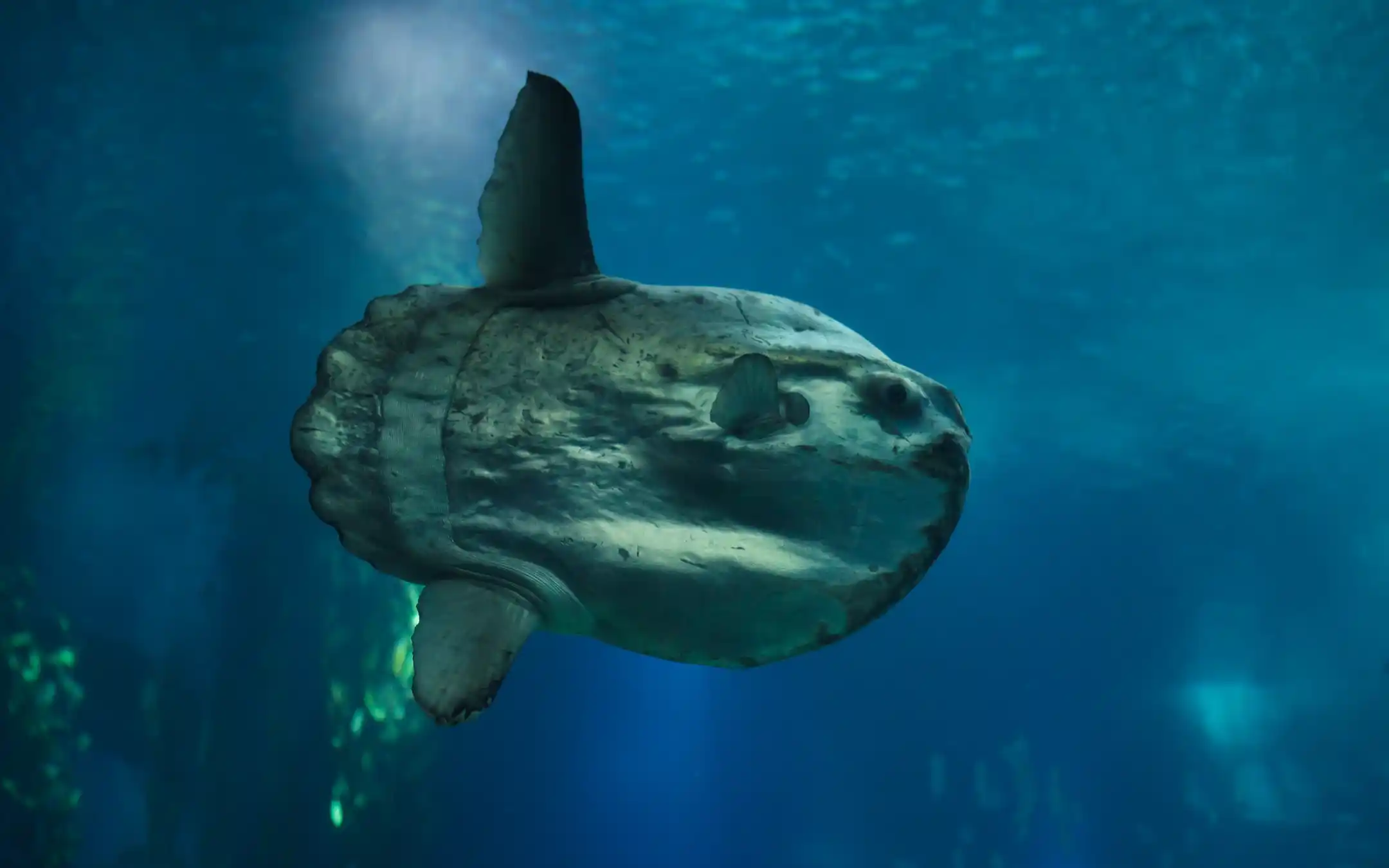
Ocean Sunfish (Mola mola)
Scientific Classification
- Kingdom: Animalia
- Phylum: Chordata
- Class: Actinopterygii
- Order: Tetraodontiformes
- Family: Molidae
- Genus: Mola
- Species: Mola mola
Physical Characteristics
The ocean sunfish is one of the heaviest bony fishes in the world, reaching weights of over 2,000 kg. It has a flattened, disk-like body and lacks a true tail, instead using a structure called a clavus for propulsion.
Habitat and Distribution
Sunfish are found in temperate and tropical oceans worldwide, from surface waters down to several hundred meters.
Behavior and Diet
Their diet consists mainly of jellyfish, though they also consume small fish and zooplankton. Sunfish are known for basking at the surface, possibly to regulate body temperature or attract parasite-removing birds.
Role in the Marine Ecosystem
By consuming large quantities of gelatinous organisms, sunfish help regulate jellyfish populations.
Conservation Status and Threats
The IUCN lists Mola mola as Vulnerable, with major threats including bycatch, plastic ingestion, and vessel strikes.
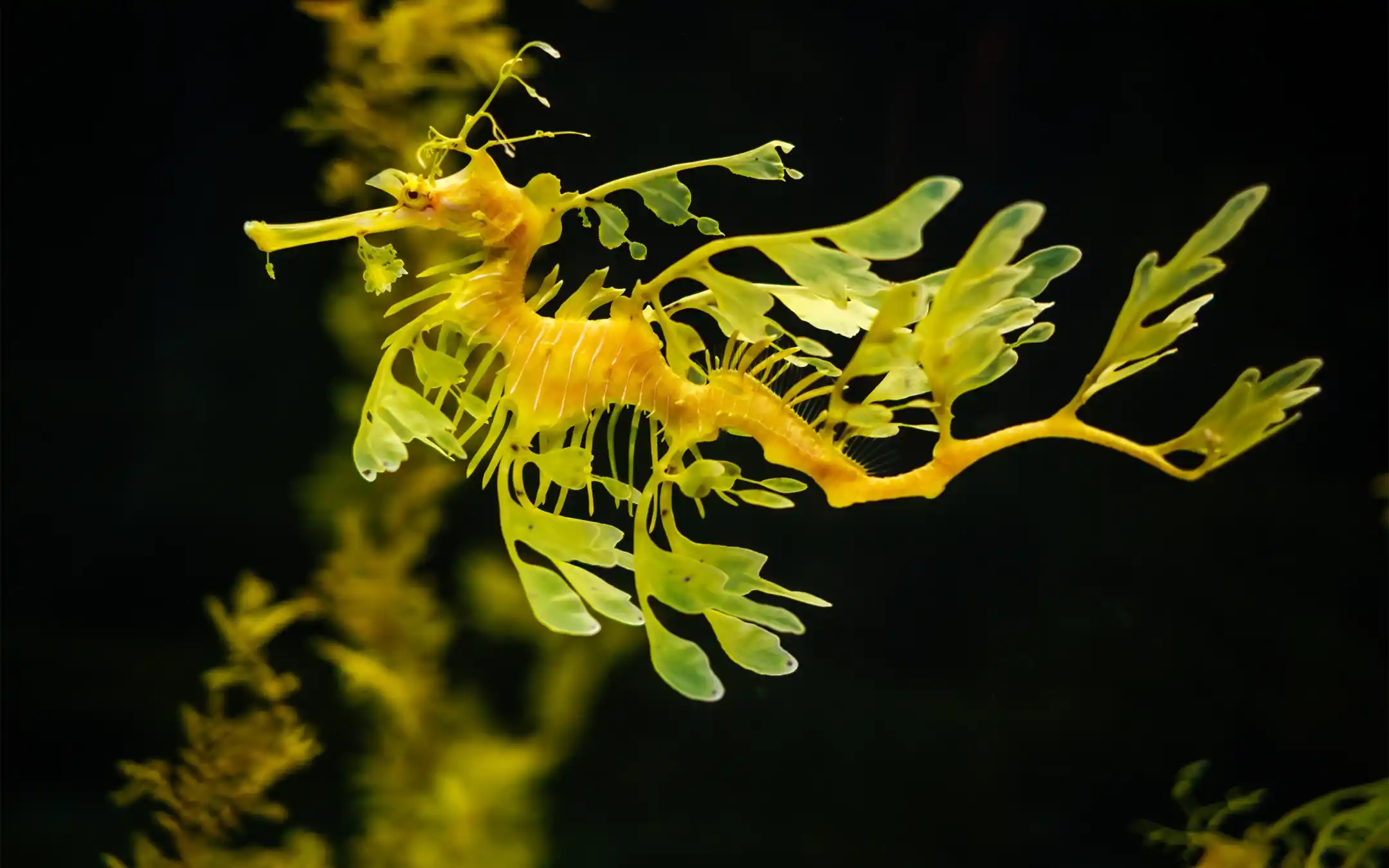
Leafy Seadragon (Phycodurus eques)
Scientific Classification
- Kingdom: Animalia
- Phylum: Chordata
- Class: Actinopterygii
- Order: Syngnathiformes
- Family: Syngnathidae
- Genus: Phycodurus
- Species: Phycodurus eques
Physical Characteristics
Leafy seadragons resemble drifting seaweed, with elaborate leaf-like appendages that provide camouflage rather than propulsion. Adults grow up to 35 cm long.
Habitat and Distribution
They are found only in southern Australian coastal waters, living among kelp forests and seagrass beds.
Behavior and Diet
Leafy seadragons feed on small crustaceans, using their elongated snouts to suck in prey. Like seahorses, males brood fertilized eggs.
Role in the Marine Ecosystem
They are part of nearshore food webs and rely heavily on healthy kelp and seagrass habitats.
Conservation Status and Threats
Classified as Near Threatened, primarily due to habitat loss, pollution, and illegal collection.
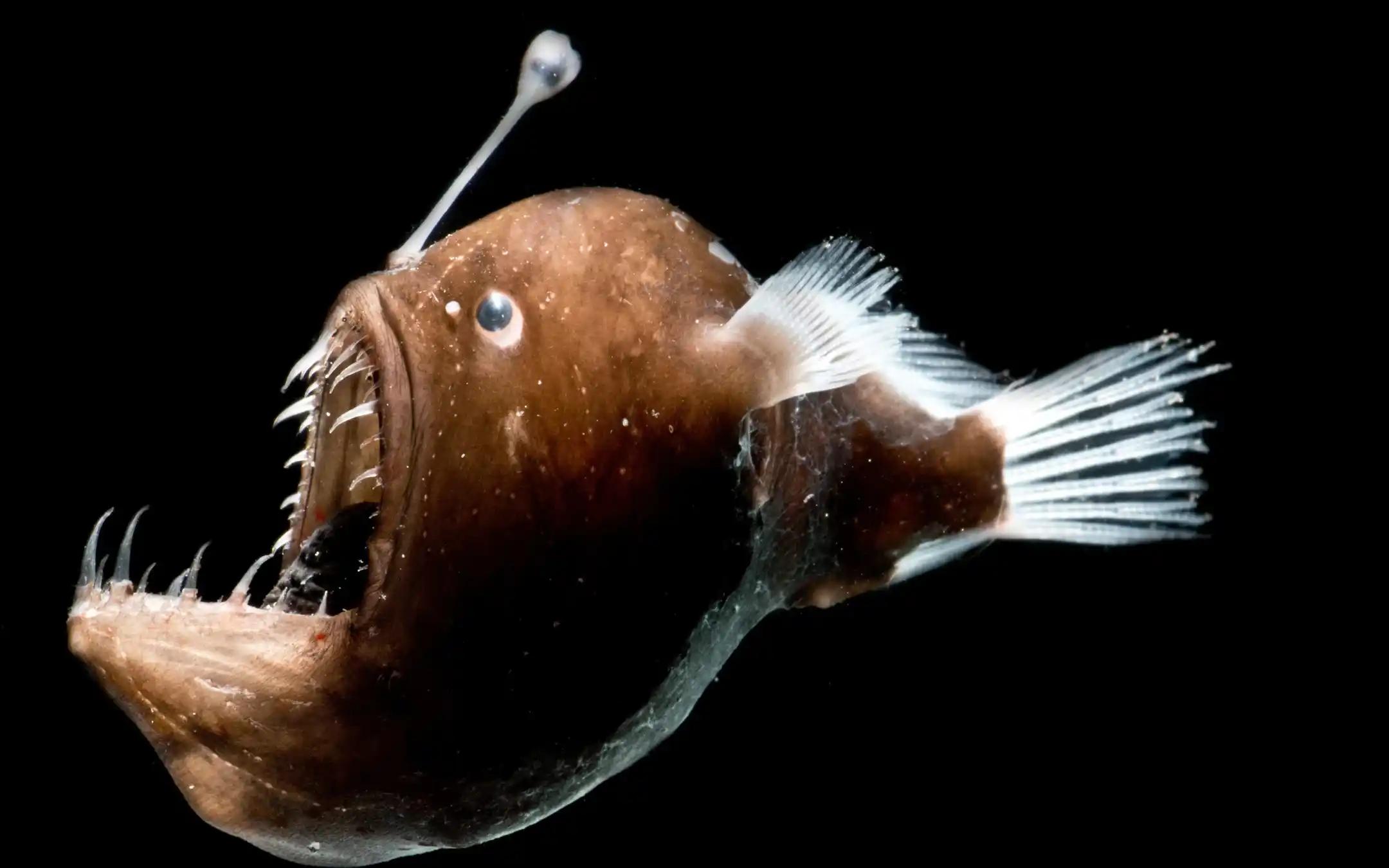
Anglerfish (Suborder Ceratioidei)
Scientific Classification (generalized)
- Kingdom: Animalia
- Phylum: Chordata
- Class: Actinopterygii
- Order: Lophiiformes
- Suborder: Ceratioidei
Physical Characteristics
Deep-sea anglerfish are known for their bioluminescent lure, used to attract prey in total darkness. Females are much larger than males, which in some species permanently attach to females.
Habitat and Distribution
They inhabit the deep ocean, typically below 1,000 meters, in all major oceans.
Behavior and Diet
Anglerfish are ambush predators, feeding on fish and crustaceans attracted by their glowing lure.
Role in the Marine Ecosystem
They are specialized predators that help structure deep-sea food webs.
Conservation Status and Threats
Most species are Data Deficient. Deep-sea trawling poses a potential risk.
Blobfish (Psychrolutes marcidus)
Scientific Classification
- Kingdom: Animalia
- Phylum: Chordata
- Class: Actinopterygii
- Order: Scorpaeniformes
- Family: Psychrolutidae
- Genus: Psychrolutes
- Species: Psychrolutes marcidus
Physical Characteristics
Blobfish appear gelatinous and shapeless at the surface due to decompression. In their natural deep-sea environment, they maintain a more typical fish shape.
Habitat and Distribution
They live at depths of 600–1,200 meters off the coasts of Australia and New Zealand.
Behavior and Diet
Blobfish are passive feeders, consuming small invertebrates that drift near them.
Role in the Marine Ecosystem
They are part of benthic deep-sea communities and reflect the health of deep habitats.
Conservation Status and Threats
They are not formally assessed, but deep-sea fishing bycatch is a significant concern.
Role of Unusual Ocean Fishes in Marine Ecosystems
Despite their differences, unusual ocean fishes play important roles as predators, prey, and ecosystem indicators. Many occupy specialized niches, helping maintain balance in food webs. Deep-sea species are especially important for nutrient cycling and energy transfer between ocean layers.
Their unusual adaptations often make them sensitive to environmental changes, meaning declines can signal broader ecosystem disruption.
Conservation Status and Threats
Many unusual ocean fishes face similar threats:
- Bycatch in commercial fisheries
- Habitat degradation, especially in coastal and deep-sea environments
- Plastic pollution, particularly for species that feed on gelatinous prey
- Climate change, affecting temperature, oxygen levels, and prey availability
A major challenge is that many species are data deficient, limiting effective management.
Interesting Facts About Unusual Ocean Fishes
- Some deep-sea anglerfish males fuse permanently to females and rely on them for survival.
- The barreleye fish can rotate its eyes inside its transparent head.
- Ocean sunfish can dive hundreds of meters despite their surface-dwelling reputation.
- Blobfish only look “blobby” when brought to the surface.
- Leafy seadragons use camouflage, not speed, as their primary defense.
Conclusion
The most unusual ocean fishes demonstrate how life adapts to nearly every marine environment on Earth. Their unique forms and behaviors are not oddities but precise evolutionary responses to specific challenges. Protecting these species means protecting the ecosystems they depend on, from shallow coastal habitats to the deep sea. Continued research, responsible fishing practices, and habitat conservation are essential to ensure these remarkable fishes remain part of our oceans.
How endangered is this animal?
Human activity increasingly affects unusual ocean fishes, even when species are not directly targeted. Commercial fishing poses a major threat through bycatch, especially for deep-sea species such as anglerfish and blobfish, which are often caught unintentionally in trawl fisheries. Habitat destruction, including damage to coral reefs, seagrass beds, and deep-sea floors, reduces critical living and breeding areas.
Plastic pollution is a growing concern, particularly for species that feed on jellyfish or plankton, such as the ocean sunfish, which may ingest plastic debris by mistake. Climate change further compounds these pressures by altering ocean temperatures, oxygen levels, and prey availability. For many unusual ocean fishes, limited scientific data makes it difficult to assess population trends, increasing the risk that declines may go unnoticed.
Sources
Smithsonian National Museum of Natural History – Fish and deep-sea species profiles
https://naturalhistory.si.edu/education/teaching-resources/marine-ecosystems
NOAA Ocean Exploration – Deep-sea fish biology and human impacts
https://oceanexplorer.noaa.gov/facts/deepsea-fish.html
IUCN Red List of Threatened Species – Species conservation status
https://www.iucnredlist.org
National Geographic – Ocean fish adaptations and conservation
https://www.nationalgeographic.com/animals/fish
FAO Fisheries and Aquaculture Division – Global fisheries and bycatch data
https://www.fao.org/fishery/en
Overview
Unusual ocean fishes include species with rare body shapes, extreme adaptations, or behaviors suited to life in challenging marine environments. From deep-sea fishes with bioluminescent organs to coastal species that rely on advanced camouflage, these fishes reflect the diversity and adaptability of ocean life. Many occupy highly specialized ecological niches and are important indicators of ecosystem health, particularly in deep-sea and reef environments that are still poorly understood.
Help us save the oceans
by surfing the web!
.png)
.png)
.png)

.png)
.png)
.png)
.png)
.png)
.png)