

The nautilus is a ghost from an ancient world. While most cephalopods evolved sophisticated brains, flexible bodies, and elaborate camouflage over the past 200 million years, the nautilus went a different direction. It remained fundamentally unchanged, a living link to its ancestors from 500 million years ago. When dinosaurs still roamed the Earth, nautiluses were already perfected, already thriving in the oceans. They watched the reign of the dinosaurs rise and fall and continued their peaceful existence virtually unaltered. This makes them something almost unimaginable in evolutionary terms: a success so complete that improvement became unnecessary. Yet the modern nautilus faces a crisis. Not from predators or environmental catastrophe, but from collectors and tourists who value its beautiful shell above the animal inside it. The species faces overharvesting, and scientists worry that if current trends continue, this 500-million-year legacy could end in the next century.
A Shell-Bound Marine Pioneer
Every nautilus lives inside a coiled shell divided into chambers. The animal itself occupies only the outermost chamber, but it's connected to all the others through a tube called the siphuncle. As the nautilus grows, it periodically constructs a new chamber larger than the last, then seals itself inside. The abandoned chambers serve a purpose: the nautilus controls the amount of gas and fluid in each one, creating a biological buoyancy system that allows it to rise and fall in the water column.
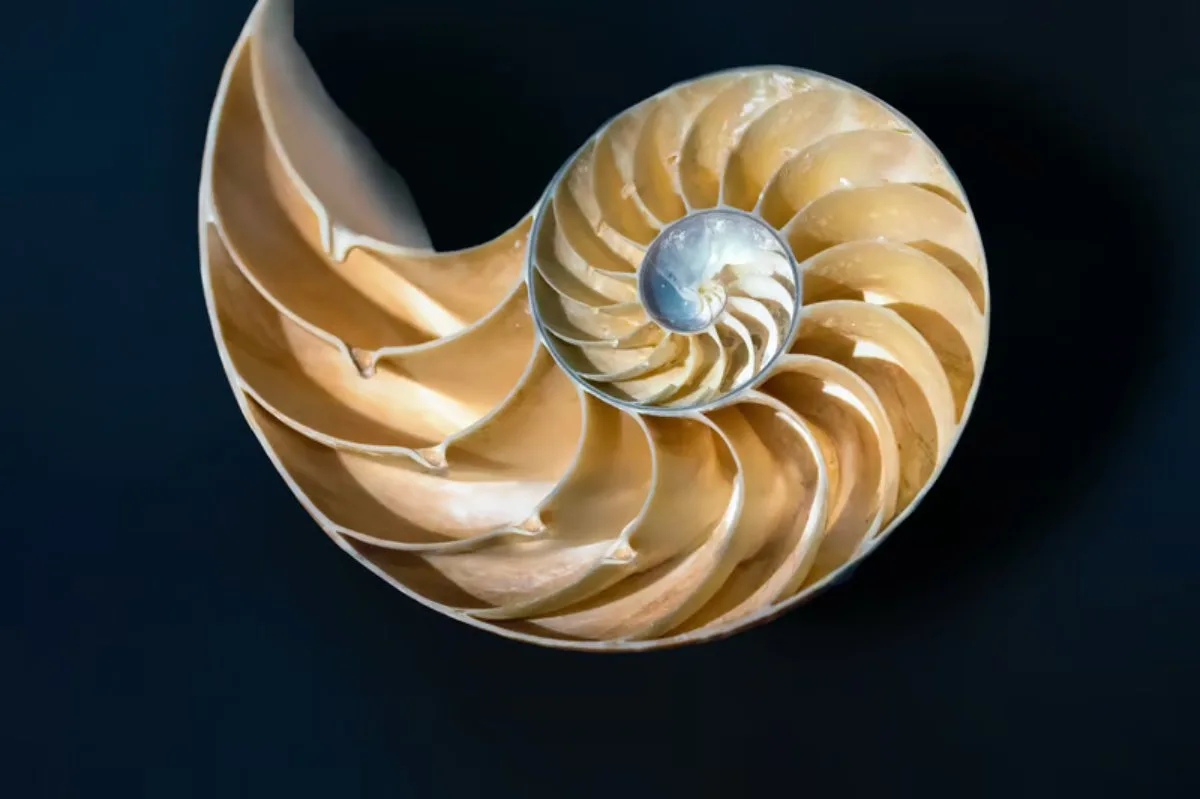
This is submarine technology invented by evolution. The nautilus moves up and down by adjusting its internal pressure. To descend, it allows fluid to fill the older chambers. To ascend, it pumps the fluid out through the siphuncle, replacing it with gas. It's remarkably efficient. The system works so well that engineers have studied nautilus shells to design better submarine ballast systems. The shell's spiral structure distributes pressure evenly across its entire surface. Each chamber supports the weight of the chambers above it. It's an architectural marvel, a structure that balances strength with minimal weight.
Only one cephalopod lineage kept the external shell, the nautiluses and their distant relatives, the argonauts. Everything else abandoned it. Squid developed a rigid pen hidden inside their body. Octopuses dispensed with shells entirely, relying on flexibility and intelligence instead. The nautilus stuck with the original design, the one that worked so well it never needed refinement.
Jet Propulsion and Graceful Hunting
Cephalopods propel themselves through a muscular contracting siphon, expelling water forcefully. The nautilus does this too, but with a grace that belies its ancient lineage. Watch a nautilus move through the water and you'll see something serene not the aggressive darting of a squid or the awkward crawling of an octopus, but a slow, pulsing progression, as if the ocean itself were gently pushing it forward.
The nautilus hunts small fish and crustaceans it encounters on the ocean floor. It drops to depths of 2,000 feet or more during the day and rises into shallower waters at night, a daily migration pattern called diel vertical migration. Its eyes are simple, very different from the complex camera-like eyes of most cephalopods. They're more like pinhole cameras, producing dim images. What the nautilus lacks in vision, it compensates for with patience. It waits. It drifts. When prey passes close enough, the nautilus extends its 90 flexible tentacles to snatch it.
Those tentacles lack suckers, the most distinctive feature of squid and octopus arms. Instead, they're covered with sensory ridges and small grooves, like living suction cups with a gentler grip. The nautilus is a hunter of opportunity, not an ambush predator. It takes what comes its way and seems content with whatever that might be.
The Only Cephalopod with an Outer Shell
This distinction matters. Every other cephalopod is soft-bodied or relies on internal hardness. The nautilus alone wears its skeleton on the outside—a remnant of its mollusk heritage. All mollusks originally possessed shells. Clams and snails kept them. Squid and octopuses abandoned them. But the nautilus clung to the ancestral design, modifying it to perfection rather than trying something radically new.
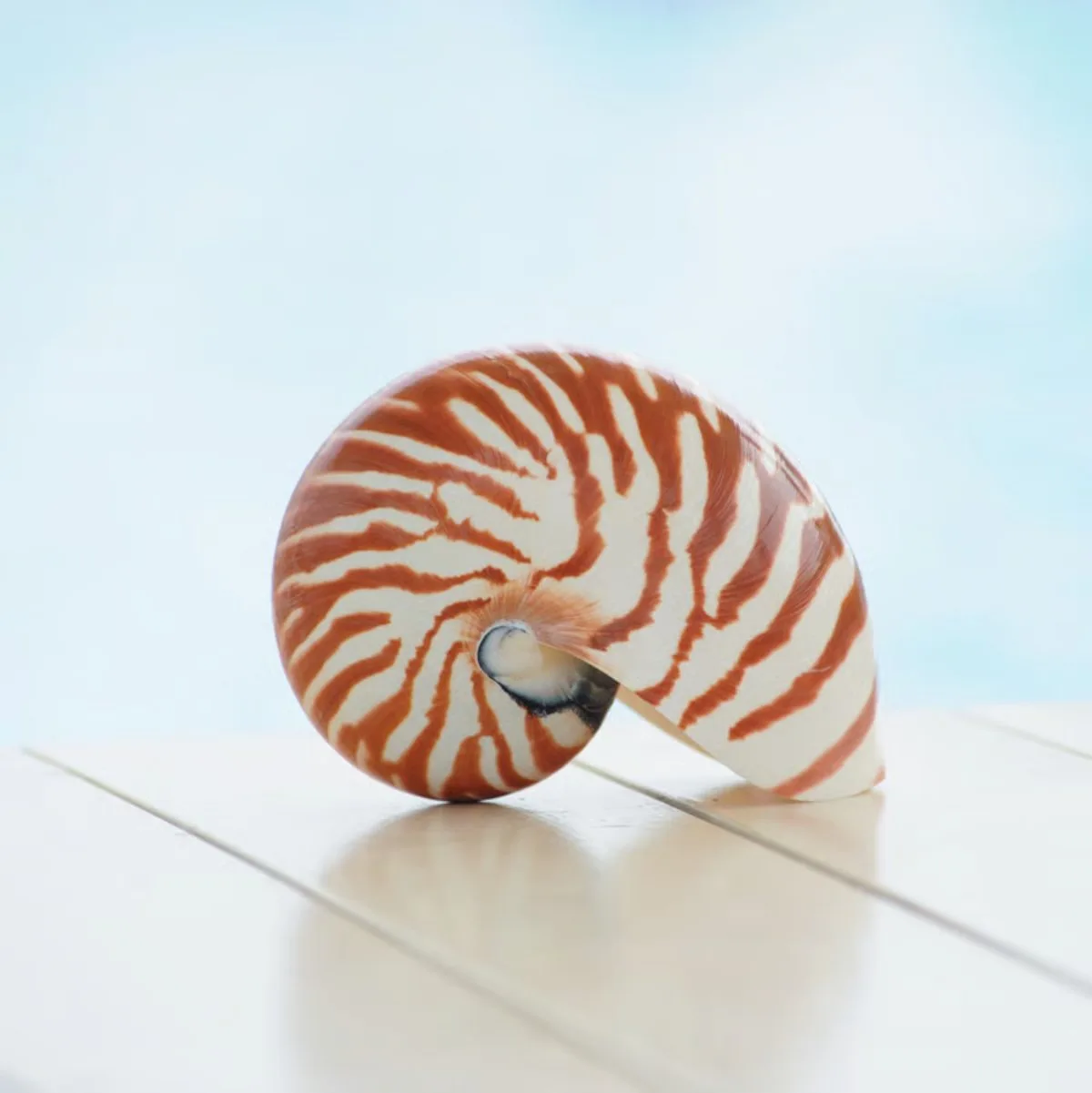
The shell is spectacular to look at a cream-colored spiral with elegant brown striping, the interior glimmering with mother-of-pearl. It's this beauty that has made the nautilus hunted for centuries. Collectors prize nautilus shells. They're carved into jewelry, polished and displayed in aquariums, used as decorative objects. Tourists buy them at seaside shops. The trade in nautilus shells has historically been vast, with hundreds of thousands taken annually throughout the Indo-Pacific region where nautiluses live.
The shell does confer advantages. It provides protection against predators, you can't compress a nautilus as you might an octopus. It creates space for those buoyancy chambers. It allows the animal to retreat into absolute safety. But it also limits the nautilus's shape. An octopus can squeeze into impossibly small crevices. A squid can dart through narrow spaces. The nautilus is constrained by its rigid home.
How endangered is this animal?
Overharvesting and An Uncertain Future
Nautiluses are long-lived animals with slow reproduction rates. A female might produce only a few hundred eggs across her lifetime. They take years to reach maturity. Population recovery is slow. When harvesting pressure is applied, populations can't bounce back quickly. By the 1980s, so many nautiluses were being killed for the shell trade that biologists began sounding alarms. The exploitation continued.
In 2016, the Palau government implemented a complete ban on nautilus exports. In 2018, nearly 100 countries voted to add nautiluses to CITES appendix, restricting trade. Yet poaching persists. Shells still enter the market. Nobody really knows how many nautiluses remain in the wild. Population surveys are difficult when your study subjects live in deep, dark water. Some researchers estimate populations have declined by 50 percent or more over the last two decades. Others are less certain but worried nonetheless.
The irony is cutting. The nautilus, which survived asteroid impacts and mass extinctions for 500 million years, which watched the rise and fall of countless species, which adapted to changing oceans and evolving predators, now faces its greatest threat from a species that evolved just a few million years ago and has existed in its modern form for mere thousands of years.
### Quick Facts
- A nautilus shell can have up to 30 chambers, with the animal occupying only the newest and largest one
- They can dive to depths exceeding 2,600 feet, deeper than most squid or octopuses typically venture
- Nautiluses have remained virtually unchanged for the last 200 million years, making them true living fossils
- Their eggs are large and few—a female produces perhaps 100 to 200 eggs total during her 15 to 20-year lifespan
- The relationship between different nautilus species remains unclear; genetic studies suggest there may be many more species than currently recognized
Sources
Overview
Also Known As
Chambered nautilus, Pearly nautilus (Nautilus pompilius; ~6 species)
Size
Shell diameter 15–26 cm (6–10 in)
Distribution
Tropical Indo-Pacific; Philippines, Fiji, Great Barrier Reef
Habitat
Deep outer reef slopes; 100–800 m depth
Food / Diet
Crustaceans, fish, carrion
Lifespan
15–20 years (unusually long for a cephalopod)
Help us save the oceans
by surfing the web!
.png)
.png)
.png)

.png)
.png)
.png)
.png)
.png)
.png)