

While most people call them "starfish," they aren't actually fish at all, which is why scientists prefer the name sea stars. These creatures are some of the most recognizable icons of the ocean, but if you look past their famous five-armed silhouette, you’ll find one of the strangest biological blueprints in the animal kingdom.
It’s honestly hard to wrap your head around how a sea star even functions. If you were designing an animal from scratch, you probably wouldn't think to leave out the brain and the blood, but sea stars make it work beautifully.
Instead of a traditional circulatory system, they operate on what is essentially hydraulics. They have a "water vascular system" that pulls in filtered seawater to create pressure. This pressure is what allows them to operate their hundreds of tiny, suction-cup-like tube feet. It’s a bit like a highly sophisticated plumbing system that doubles as a way to walk.
Even without a central "command center" or brain, they aren't just drifting aimlessly. They have a complex nerve net that allows them to "sense" their surroundings. They can detect light, find food, and even recognize predators, proving that nature has more than one way to build a smart, successful hunter.
Even more impressive is their resilience. If a sea star loses an arm to a predator, it doesn't just heal; it regenerates the limb entirely. In some cases, a single severed arm can even grow back into a whole new star.
Don’t let their slow pace fool you, sea stars are formidable predators. They have a truly bizarre way of eating: they can actually push their stomachs out of their bodies to digest prey (like clams or oysters) right inside their shells.
By keeping populations of shellfish in check, they act as the "engineers" of the seafloor. Without them, certain species would take over, crashing the biodiversity of the entire reef. They are a perfect example of how you don't need a centralized brain to be absolutely essential to the planet.
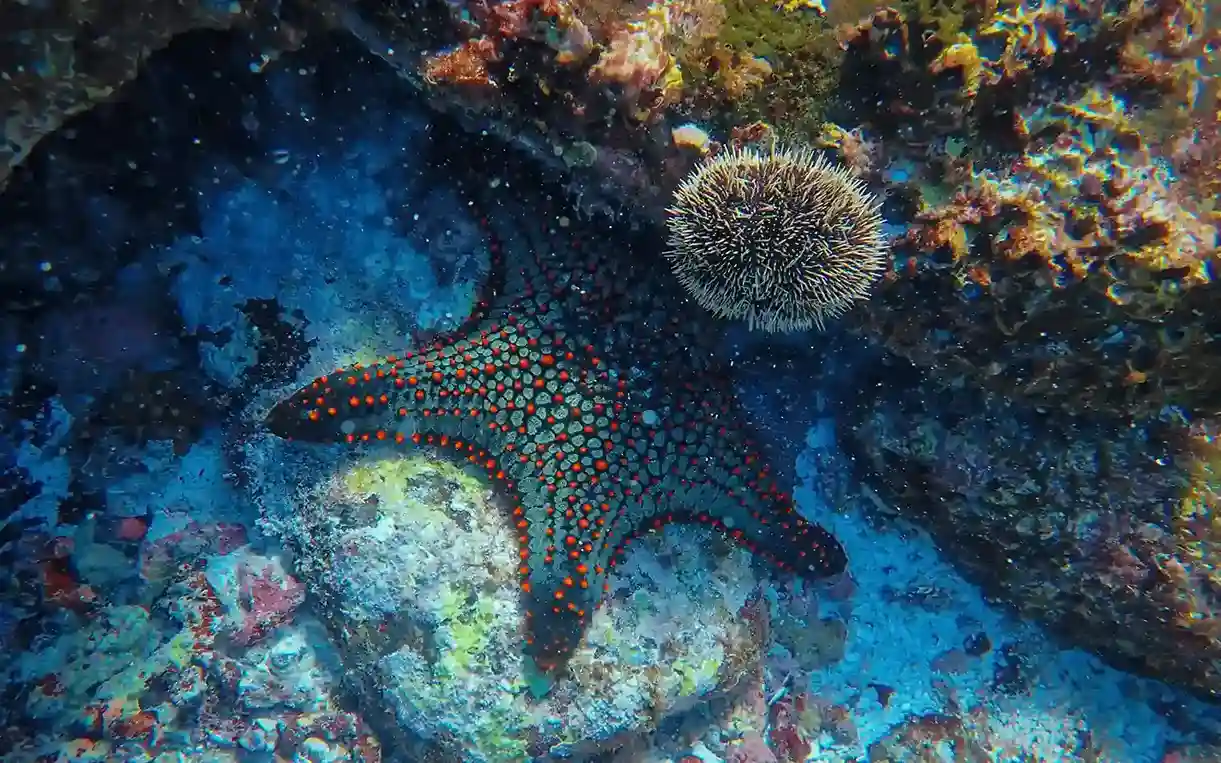
Scientific Classification
Starfish represent a large and diverse group rather than a single species. Their general scientific classification is as follows:
- Kingdom: Animalia
- Phylum: Echinodermata
- Class: Asteroidea
- Order: Multiple orders (e.g., Forcipulatida, Valvatida, Paxillosida)
- Family: Varies by species
- Genus: Varies (e.g., Asterias, Pisaster, Oreaster)
- Species: Over 2,000 described species worldwide
They are closely related to sea urchins, sand dollars, and sea cucumbers.
Physical Characteristics
Size and Appearance
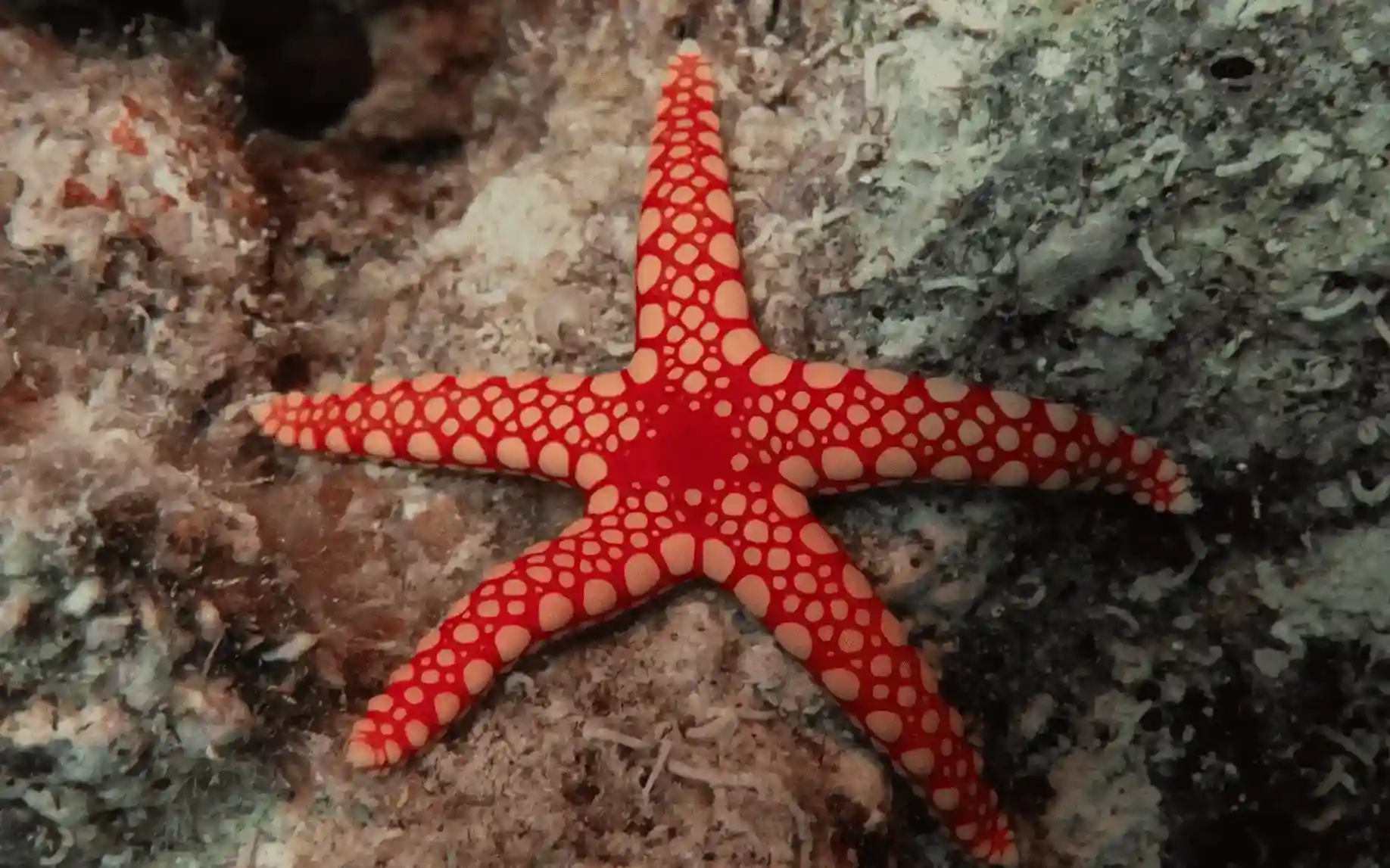
While we usually picture the classic five-armed shape, sea stars are incredibly diverse in person. Some species sport dozens of arms, and they can range from the size of a coin to over three feet wide. Their vibrant skin—which comes in every color from deep purple to bright orange—is actually a layer of tough, armor-like protection. Beneath that surface is a skeleton made of calcium plates that gives them their structure and keeps them safe from hungry predators.
The Ultimate Survival Kit
The way these creatures function is like something out of a sci-fi novel. Instead of using blood, they rely on a "water vascular system" that pumps filtered seawater through their bodies. This hydraulic pressure is what powers the hundreds of tiny, suction-cup tube feet on their undersides, allowing them to grip rocks or pry open shells with surprising strength.
Even more impressive is their ability to bounce back from injury. If a sea star loses an arm, it doesn't just heal the wound; it can regenerate the entire limb from scratch. In some species, a single severed arm can even grow a brand-new central disc and become a whole new individual. They manage all of this without a heart or a central brain, using a decentralized "nerve net" to sense light and find their way across the ocean floor.
Habitat and Distribution
Global Distribution
Starfish are found in all of the world’s oceans, from tropical coral reefs to polar seas. They inhabit both shallow coastal waters and deep-sea environments, with some species living at depths exceeding 6,000 meters.
Preferred Environments
You’ll find sea stars just about everywhere on the ocean floor, though they definitely have their favorite hangouts. They’re common fixtures on rocky shorelines and coral reefs, but they’ve also mastered life in sandy seagrass beds and towering kelp forests. Some species are "shallow water" fans that enjoy the sun, while others are built for the crushing pressure and freezing darkness of the deep sea.
Even though they’re found all over the map, sea stars are surprisingly delicate. Think of them like biological sponges; because they literally pump the surrounding seawater through their bodies to get around, they "feel" every shift in the ocean's chemistry. If the water gets too warm or the salt levels fluctuate, they can’t just filter it out. Because they're so sensitive, seeing a thriving population of them is usually a great sign that the local environment is stable and healthy.
Behavior and Diet
Feeding Habits
When it comes to dinner time, sea stars are much more intense than they look. Depending on the species, they can be carnivorous, omnivorous, or even detritivores that scavenge for organic debris. Most have a particular taste for mollusks like mussels and clams, but others prefer to graze on coral polyps, sponges, or algae.
Their way of eating is pure science fiction. Instead of swallowing their food whole, they perform a trick called stomach eversion. They use those powerful tube feet to pry open a shell just a tiny crack, then they actually push their cardiac stomach out of their mouth and tuck it inside the shell of their prey. This allows them to begin digestion externally, liquefying the meal before slurping the nutrients back into their bodies.
Movement and Behavior
In terms of their social lives, sea stars are mostly solitary. They spend their time slowly creeping across the seafloor, usually only gathering in "aggregations" if there’s a massive feast nearby or when it's time for the breeding season.
Their life cycle is just as dramatic as their feeding habits. They can reproduce sexually by releasing gametes (eggs and sperm) into the water, but many also have the incredible ability to reproduce asexually through fragmentation—literally splitting off a piece of themselves to grow an entirely new star. Before they settle down on the bottom, they start out as tiny, free-swimming larvae that undergo a total metamorphosis before they finally look like the iconic stars we recognize.
Role in the Marine Ecosystem
Sea stars are way more than just "decorations" on the ocean floor; they’re actually the heavy lifters of the underwater world. Scientists often call them keystone species, which is a fancy way of saying they’re the glue holding the entire ecosystem together.
Take the Ochre sea star (Pisaster ochraceus), for example. If they weren't around to snack on mussels, those mussels would basically pull a hostile takeover, crowding out every other species and killing off the local biodiversity. By being the neighborhood "enforcer," the sea star makes sure there's room for everyone else to live.
They also handle a lot of the cleanup in benthic communities (the life happening down in the seafloor muck). By eating a mix of different organisms and organic waste, they help with nutrient cycling. They’re essentially the ocean’s recyclers, breaking down material and "unlocking" nutrients so the rest of the food web can actually use them.
In coral reefs, their role is a bit of a double-edged sword. While they usually keep things balanced, some species—like the Crown-of-Thorns—can turn into a real problem if their numbers explode. They can strip a reef of its coral faster than it can grow back. It just goes to show that while they don't have brains, these stars are the ones calling the shots in the ecosystem.
Conservation Status and Threats
IUCN Status
The conservation status of starfish varies widely by species. Many are listed as Least Concern, while others are Data Deficient or threatened. Because starfish diversity is high and research coverage uneven, population trends are not well understood for many species.
Major Threats
One of the most serious threats to starfish populations is sea star wasting disease, a poorly understood condition that has caused mass die-offs in several regions, particularly along the Pacific coast of North America. Scientists believe the disease may be linked to warming ocean temperatures and changes in microbial communities, though research is ongoing.
Other threats include habitat destruction, pollution, ocean acidification, and climate change. Rising temperatures and changes in salinity can disrupt reproduction and larval development. Coastal development and sedimentation can degrade habitats essential for starfish survival.
Human activities such as overfishing can indirectly affect starfish by altering food webs, sometimes leading to population imbalances.
Interesting Facts About Starfish
To wrap things up, here are some of the most "out there" facts about sea stars that prove just how alien they really are.
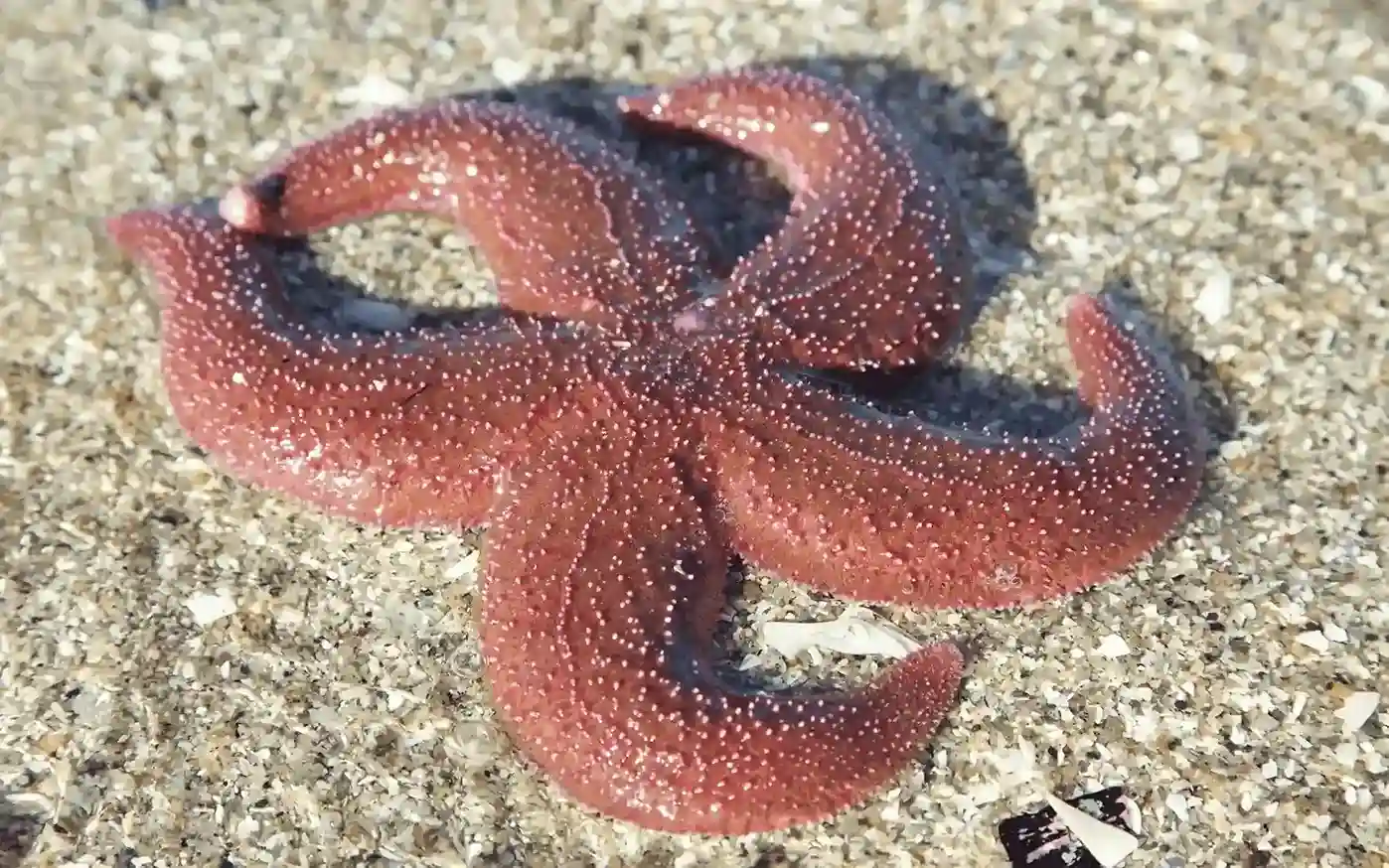
For starters, their healing powers are next-level. We’ve mentioned they can regrow a lost arm, but some species are so resilient that a single severed limb can actually grow an entirely new central disc and become a brand-new individual. Their anatomy is just as strange. They manage to navigate the world without a single drop of blood or a central brain, instead letting filtered seawater carry nutrients through their bodies. And while they don't have "eyes" like ours, they have eyespots at the very tip of every arm. These aren't for seeing detail, but they’re perfect for sensing light and shadows, which helps them find their way around the reef. They aren’t just short-lived garden pests, either; some species can actually live for over 30 years. And while the five-pointed star is the classic look, don't be surprised if you run into a species with 10, 20, or even 40 arms, nature really went wild with the variations on these guys.
Conclusion
To wrap it all up, sea stars are much more than just a cool shape you find in a tide pool. They’re these incredibly weird, highly specialized survivors that play a huge part in how the ocean functions. Between their "alien" biology—like breathing through their feet and eating with their stomachs outside their bodies—and their ability to literally rebuild themselves from a single limb, they are one of nature's most successful experiments.
But even with all that toughness, they aren't invincible. They’re facing some pretty serious hurdles right now, from mysterious diseases like "wasting syndrome" to the bigger, more complex issues of climate change and habitat loss. Because they’re so sensitive to the water they live in, they are often the first to feel it when things go wrong.
At the end of the day, protecting sea stars isn't just about saving one type of creature. Because they’re the "architects" of the seafloor, keeping them healthy ensures that the entire neighborhood—from the colorful coral reefs to the rugged rocky coastlines—stays in balance. They’ve been around for hundreds of millions of years, and by keeping an eye on their health, we’re really keeping an eye on the health of the entire ocean.
How endangered is this animal?
Human activity affects starfish populations both directly and indirectly. Climate change is a major factor, as rising ocean temperatures are linked to increased outbreaks of sea star wasting disease, which has caused mass die-offs in several regions. Although the exact cause is still debated, warmer conditions appear to worsen disease severity.
Ocean acidification may interfere with the development of starfish larvae and weaken calcium-based body structures. Pollution, including chemical runoff and sedimentation from coastal development, degrades habitats where starfish feed and reproduce.
Human-driven changes to food webs, such as overfishing of predators or competitors, can also lead to starfish population imbalances. In some cases, this results in population explosions that damage coral reefs, while in others it contributes to local population decline.
Sources
National Geographic – Starfish facts and biology
https://www.nationalgeographic.com/animals/invertebrates/facts/starfish-1
NOAA – Are starfish really fish? (starfish overview)
https://oceanservice.noaa.gov/facts/starfish.html
Encyclopædia Britannica – Sea star description and traits
https://www.britannica.com/animal/sea-star
Smithsonian Science Education Center – All about starfish
https://ssec.si.edu/stemvisions-blog/all-about-starfish
Wikipedia – Starfish (Asteroidea) taxonomy and distribution
https://en.wikipedia.org/wiki/Starfish
Overview
Also Known As
Sea stars
Size
Typically 2–30 cm (0.8–12 in) across; some species exceed 1 m (3 ft) in diameter
Distribution
Worldwide, in all oceans from tropical to polar regions
Habitat
Seafloor environments including coral reefs, rocky shores, sandy bottoms, seagrass beds, and deep-sea habitats
Food
Molluscs, coral polyps, sponges, algae, and organic debris, depending on species
Lifespan
Up to 30–35 years in some species
Help us save the oceans
by surfing the web!
.png)
.png)
.png)

.png)
.png)
.png)
.png)
.png)
.png)