

Coral reefs are often described as underwater landscapes, yet they are entirely built by living organisms. Corals are animals that slowly construct massive limestone structures, creating some of the most complex ecosystems on the planet. These reefs support an extraordinary range of marine life and provide essential benefits to coastal regions. Despite their importance, coral reefs are now among the most endangered ecosystems in the ocean.
The decline of corals is not limited to a single region or species. It is a global issue driven by environmental change and human pressure, with consequences that extend far beyond the reefs themselves.
What Corals Actually Are
From a biological perspective, corals belong to the animal kingdom. They are invertebrates within the phylum Cnidaria, a group that also includes jellyfish and sea anemones. Reef-building corals are classified under the class Anthozoa and the order Scleractinia. Within this group are hundreds of genera and thousands of species, each contributing differently to reef structure and function.
Rather than existing as individual animals, most corals live in colonies made up of thousands of genetically identical polyps. Over long periods, these colonies produce the calcium carbonate framework that forms coral reefs. This process is extremely slow, which makes reef recovery from damage particularly difficult.
Form, Color, and Survival Strategies
Coral polyps are small, soft-bodied animals with tentacles arranged around a central mouth. In reef-building species, each polyp produces a hard skeleton beneath its body. As generations of polyps grow and die, their skeletons accumulate, forming the physical structure of the reef.
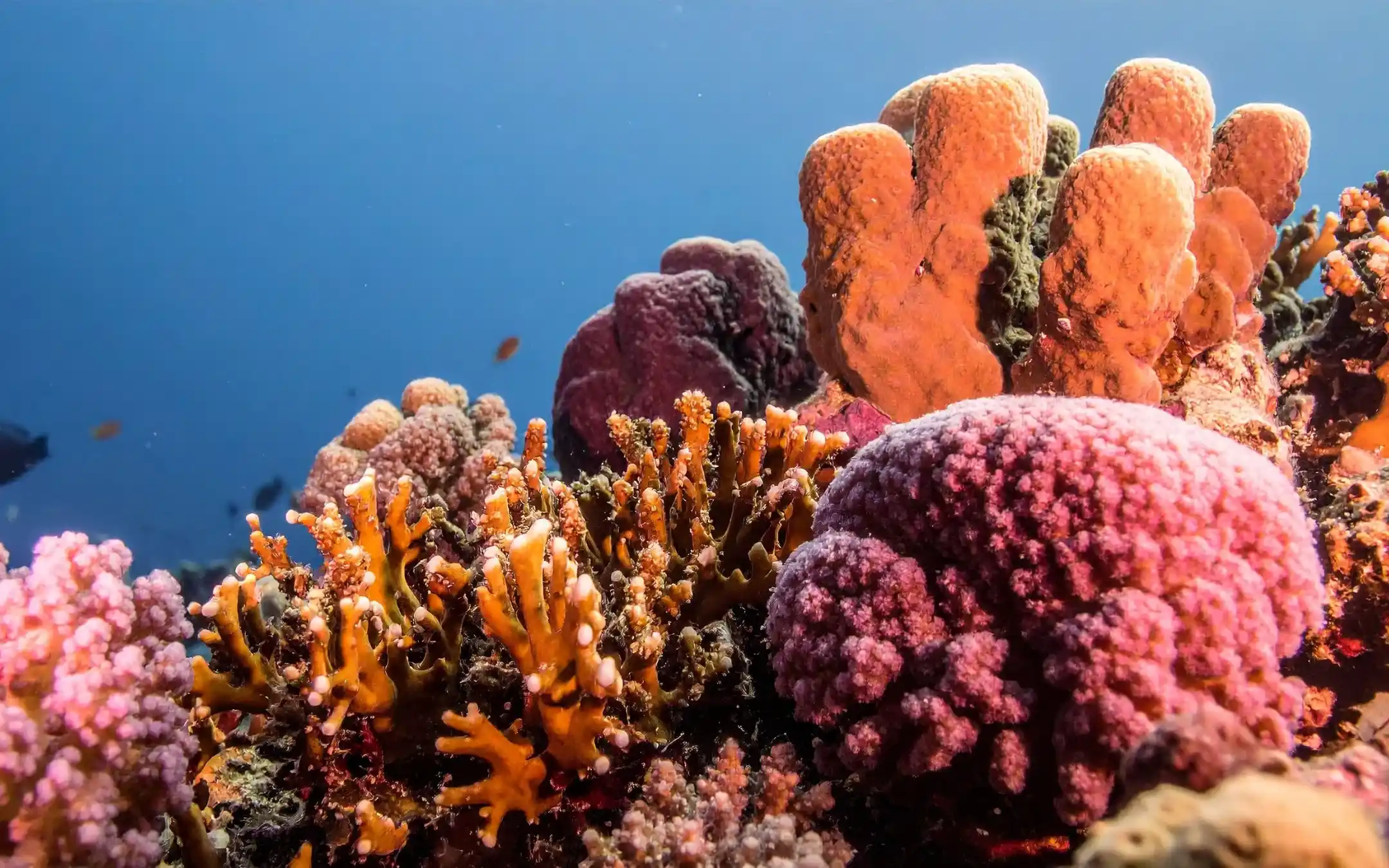
The wide range of coral shapes reflects adaptation to different environmental conditions. Some species grow upward in branching forms to maximize light exposure, while others develop massive, dome-shaped structures that can withstand strong waves. Flat, plate-like corals are adapted to capture sunlight in deeper or shaded environments.
Color in corals is largely the result of their partnership with microscopic algae living inside their tissues. These algae, commonly referred to as zooxanthellae, perform photosynthesis and provide corals with most of their energy. This symbiosis is the foundation of coral reef productivity and also the reason corals are so sensitive to environmental change.
Where Coral Reefs Exist
Coral reefs are most commonly found in warm, shallow waters of tropical and subtropical oceans. They are concentrated in regions where sunlight can penetrate the water, typically at depths of less than 50 meters. The Indo-Pacific region hosts the highest coral diversity, with particularly rich reef systems in the Coral Triangle. Significant reef systems also exist in the Caribbean, the Red Sea, and parts of the western Atlantic.
These environments must remain relatively stable. Corals thrive in clear water with consistent temperatures, low nutrient levels, and moderate water movement. Even small deviations from these conditions can stress coral colonies, reducing growth rates and increasing vulnerability to disease.
How Corals Feed and Reproduce
Corals rely on a combination of energy sources to survive. During daylight hours, their symbiotic algae supply sugars produced through photosynthesis. At night, coral polyps become active predators, extending their tentacles to capture plankton and organic particles drifting through the water.
Growth is slow, and reproduction is carefully timed. Many coral species reproduce sexually through mass spawning events, during which colonies release eggs and sperm simultaneously into the water. These events are often synchronized with lunar cycles and seasonal temperature changes. Corals also reproduce asexually, allowing damaged reefs to recover locally through fragmentation and regrowth.
This slow pace of growth and reproduction makes corals particularly vulnerable to repeated disturbances.
Why Coral Reefs Matter
Coral reefs function as the foundation of some of the most productive marine ecosystems on Earth. They provide shelter, feeding grounds, and breeding sites for an enormous variety of fish and invertebrates. Many species depend entirely on coral reefs during at least one stage of their life cycle.
Beyond biodiversity, reefs play a critical role in protecting coastlines. By absorbing wave energy, they reduce erosion and help shield coastal communities from storms. Coral reefs also support fisheries and tourism, contributing significantly to local and global economies.
The loss of coral reefs often leads to the collapse of associated ecosystems, triggering declines in fish populations and altering food webs across entire regions.
Endangered Status and Ongoing Decline
A growing number of coral species are listed by the IUCN Red List as Vulnerable, Endangered, or Critically Endangered. One of the most visible signs of coral stress is bleaching, a process that occurs when elevated water temperatures cause corals to expel their symbiotic algae. Without these algae, corals lose both their color and their primary energy source.
If bleaching conditions persist, coral mortality increases dramatically. Ocean acidification further compounds the problem by reducing the availability of carbonate ions needed for skeleton formation. These global stressors are intensified by local pressures such as pollution, sedimentation, overfishing, and coastal development.
While some corals show limited resistance to changing conditions, current rates of warming and acidification exceed the adaptive capacity of most species.
.webp)
Noteworthy Facts About Corals
Some coral colonies have been growing continuously for thousands of years, making them among the oldest living organisms on Earth. Coral skeletons preserve chemical records that allow scientists to reconstruct past ocean conditions. Despite covering a very small fraction of the ocean floor, coral reefs support an outsized proportion of marine biodiversity. Importantly, not all corals form reefs, as many species live independently in deeper or colder waters.
Conclusion
Endangered corals and coral reefs are living systems that reflect the overall health of the oceans. Their decline is a clear signal of environmental imbalance driven largely by human activity. Protecting coral reefs requires coordinated global efforts to address climate change, reduce pollution, and manage coastal ecosystems sustainably.
The future of coral reefs will shape the future of marine biodiversity, coastal protection, and the communities that depend on healthy oceans. Preserving them is not optional - it is essential.
How endangered is this animal?
Human activity is the primary driver behind the decline of coral reefs. Climate change, caused by increased greenhouse gas emissions, has led to more frequent and severe bleaching events worldwide. Land-based pollution introduces excess nutrients and sediments into coastal waters, reducing water clarity and promoting harmful algal growth.
Overfishing disrupts reef ecosystems by removing key species that help control algae and maintain balance. Physical damage from anchors, tourism, and destructive fishing practices further weakens reef structures. These combined pressures reduce the ability of corals to recover from natural disturbances.
Sources
NOAA Coral Reef Conservation Program
https://coralreef.noaa.gov
Smithsonian National Museum of Natural History – Coral Reefs
https://ocean.si.edu/ocean-life/invertebrates/corals-and-coral-reefs
IUCN Red List of Threatened Species – Corals
https://www.iucnredlist.org/resources/coral-reefs
National Geographic – Coral Reefs
https://www.nationalgeographic.com/science/article/scientists-work-to-save-coral-reefs-climate-change-marine-parks
Overview
Also Known As
Stony corals, reef-building corals
Size
Individual polyps: a few millimeters to centimeters; coral colonies can grow several meters across over centuries
Distribution
Tropical and subtropical oceans worldwide, primarily between 30°N and 30°S latitude
Habitat
Shallow, clear marine waters; coral reefs, lagoons, reef slopes, and coastal environments with stable temperatures
Food
Photosynthetic energy from symbiotic algae (zooxanthellae) and plankton captured with tentacles
Lifespan
Individual polyps: several years; coral colonies can live for hundreds to thousands of years
Help us save the oceans
by surfing the web!
.png)
.png)
.png)

.png)
.png)
.png)
.png)
.png)
.png)